
Aluminum Dip Brazing

Parfuse Corporation provides industrial aluminum dip brazing services for manufacturers producing intricate aluminum components. With over 50 years of experience, we handle contract manufacturing for prototypes, complex assemblies, and production quantities. Aerospace, defense, electronics, medical, and automotive companies rely on our specialized joining capabilities. From our New York facility, we serve customers nationwide, combining experienced technicians, substantial salt bath capacity, and practical engineering consultation.
Contract Aluminum Dip Brazing Services for Manufacturers

An incomplete brazed joint can turn an otherwise finished component into an expensive piece of scrap. For OEMs, equipment manufacturers, and engineering teams, outsourcing this specialized work often makes more sense than operating and maintaining their own molten salt bath equipment.
Parfuse provides contract aluminum dip brazing services from its NY facility to manufacturers nationwide. We handle prototypes, small batches, and recurring production orders. Customer designed parts and supplied assemblies can be evaluated for compatibility, while engineering consultation helps address unusual joint configurations, material considerations, and fabrication challenges before production begins.
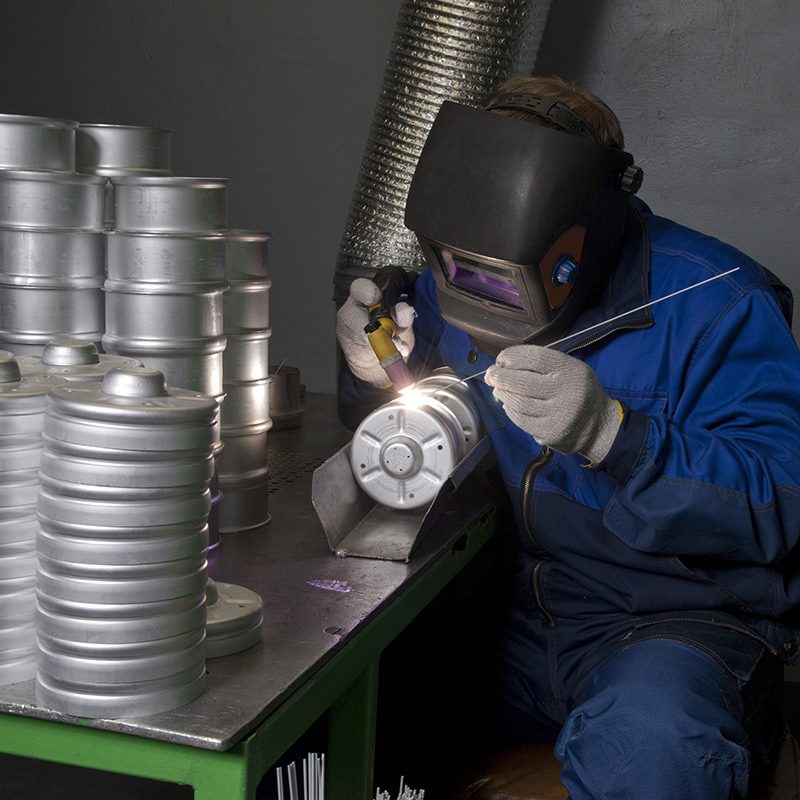
Reliable Results Through Technical Expertise
Parfuse Corporation understands that every project requires dependable results delivered on time. Our process reduces uncertainty by combining advanced facilities, technical skill, and a long-standing record of success.
We consult with clients to identify cost-saving opportunities, resolve design challenges, and ensure durable assemblies tailored to precise specifications. Partner with specialists who make aluminum bonding solutions efficient, consistent, and worry-free. Contact us today to move your project forward with confidence.
Our Aluminum Dip Brazing Process
Every assembly presents different manufacturing considerations. As a precision aluminum brazing service provider, Parfuse follows a defined sequence, beginning with design evaluation and continuing through salt bath processing, cleaning, and inspection.
Step 1: Review Drawings and Joint Requirements
Before production, our team examines component drawings, alloy specifications, joint geometry, and required clearances. Potential fit or fabrication concerns are identified early.
Step 2: Prepare and Assemble Components
Parts are cleaned and positioned for brazing. Depending on the design, filler metal placement, assembly alignment, and fixturing require particular attention.
Step 3: Perform Salt Bath Brazing
The prepared components enter a temperature controlled molten salt bath. Heat melts the filler metal, allowing capillary action to draw it into suitable joint interfaces.
Step 4: Cool and Clean the Assembly
Following brazing, components undergo appropriate cooling and cleaning operations. Particular care is needed where internal passages or enclosed cavities may retain salt residue.
Step 5: Inspect and Complete Secondary Operations
Finished joints and component dimensions are evaluated against project requirements. Leak testing, residue testing, heat treating, or finishing may follow when specified.

Aluminum Joint Brazing for Complex Assemblies
A simple two piece joint is very different from an avionic chassis containing several internal partitions. Each interface needs suitable clearance for molten filler metal to flow and form a bond.
Our aluminum joint brazing services account for these differences. Surface condition, joint geometry, material thickness, and assembly configuration all influence the finished result. An enclosed passage may complicate filler distribution, while uneven fit can interrupt capillary action.
Parfuse reviews designs with manufacturers to identify potential joint problems before parts enter production.
Types of Complex Aluminum Brazed Assemblies We Support
Parfuse manufactures complex aluminum brazed assemblies for applications involving internal passages, multiple joining surfaces, and intricate component geometries. Our work includes specialized housings, electronic equipment components, and thermal management products.
Electronic Chassis and Enclosures
Electronic chassis often contain internal partitions, mounting surfaces, and compartments for sensitive equipment. Brazing joins compatible aluminum sections without requiring individual welds at every interface.
Heat Exchangers
Heat exchangers may contain numerous internal channels separated by thin aluminum walls. Proper joint formation is important for maintaining intended flow paths and limiting leakage.
Cold Plates and Heat Sinks
When electronics generate substantial heat, cold plates and heat sinks help manage operating temperatures. Brazing can join compatible sections that form internal cooling passages.
Microwave Waveguides and Radar Components
Waveguides and radar housings can contain intricate internal features that must remain properly aligned. Joint placement and dimensional considerations deserve close attention during design evaluation.
Aerospace and Avionic Housings
Aircraft electronic housings may combine machined sections, internal dividers, and mounting features. Dip brazing offers a joining option for compatible multipart aluminum designs.
Medical Imaging and Instrumentation Housings
Medical X-ray housings and instrumentation components can involve unusual shapes and multiple joining interfaces. Parfuse evaluates suitable aluminum configurations against the customer’s drawings and specifications.
Industries We Serve with Aluminum Dip Brazing
From aircraft electronics to medical imaging equipment, Parfuse works with manufacturers facing specialized aluminum joining challenges. Our industrial aluminum dip brazing services accommodate components used across the following industries, with processing requirements evaluated individually.

Aerospace and Aviation
Avionic chassis, aircraft electronic housings, and specialized structural components often involve multiple aluminum sections. Joint design, dimensional stability, and documentation can be important considerations for these projects.

Defense
Radar housings, microwave components, and military electronic enclosures may require intricate internal construction. Parfuse works with manufacturers to evaluate brazing requirements against applicable drawings and program specifications.

Medical Technology
Medical imaging equipment may contain aluminum X-ray housings and other specialized components. The joining method must suit the assembly’s geometry, material selection, and intended operating conditions.

Telecommunications
Communication equipment frequently uses waveguides, antennas, and electronic housings with carefully arranged internal features. Aluminum dip brazing can accommodate suitable multipart configurations.

Automotive
Automotive manufacturers use aluminum components in cooling systems, heat exchangers, and specialized equipment. Brazing may be appropriate when a design contains multiple closely spaced joining surfaces.

Electronics
Electronic chassis, heat sinks, and cold plates often need compact construction and effective thermal management. Internal partitions and enclosed channels make joint evaluation particularly important.

Commercial
Industrial equipment manufacturers turn to Parfuse for custom aluminum housings, fabricated components, and heat transfer assemblies that are difficult to join using conventional methods.
Why Choose Aluminum Dip Brazing Over Other Joining Methods?
For an enclosure containing several internal joints, welding every connection may be impractical. Aluminum dip brazing offers another approach, but material compatibility, geometry, service conditions, and production requirements determine its suitability.
| Joining Method | How It Works | Where It Can Be Useful | What Manufacturers Should Consider |
|---|---|---|---|
| Aluminum Dip Brazing | Filler metal melts and flows into joints while the base aluminum remains solid. | Multipart housings, internal partitions, heat exchangers, and assemblies with numerous joints. | Compatible alloys, joint clearances, cleaning, fixturing, and thermal effects. |
| Welding | Localized heat fuses base materials, with filler metal added when needed. | Accessible joints, structural fabrication, and applications requiring localized joining. | Heat affected areas, accessibility, distortion, and welding sequence. |
| Mechanical Fastening | Screws, bolts, or rivets hold components together. | Assemblies requiring disassembly, replacement, or mechanical attachment. | Added hardware, joint access, hole placement, and sealing requirements. |
| Adhesive Bonding | Adhesive bonds prepared mating surfaces. | Certain lightweight assemblies and applications involving dissimilar materials. | Surface preparation, curing, operating temperatures, and environmental exposure. |
| Soldering | A lower temperature filler joins compatible materials without melting the base metal. | Electrical connections and selected lightly loaded components. | Joint strength, operating temperature, and application limitations. |
No single method is appropriate for every aluminum assembly. A design with accessible structural joints may favor welding, while an electronic chassis containing numerous internal partitions may be better suited to dip brazing.
Parfuse can review the proposed component and discuss whether salt bath brazing is a practical manufacturing choice.
Quality Control and Inspection for Brazed Aluminum Assemblies
A brazed assembly can look complete from the outside while containing joints that are difficult to examine directly. Consider an electronic chassis with enclosed compartments or a heat exchanger with narrow internal passages. Once the components are joined, reaching those areas may be impossible without damaging the finished part.
For this reason, inspection requirements should be considered before brazing begins, not added as an afterthought.

Visual and Dimensional Inspection
After cleaning, accessible joints can be examined for visible irregularities, incomplete filler coverage, or other conditions identified in the inspection plan.
Dimensional checks may also be necessary. For example, an avionic housing might have mounting surfaces that must align with adjoining equipment. Even when the brazed joints are acceptable, thermal processing can affect component geometry.
Customer drawings should identify critical dimensions, inspection locations, and applicable acceptance limits. Parfuse can then evaluate those requirements against the proposed manufacturing sequence.
Leak Detection for Sealed Assemblies
A cold plate containing internal cooling passages presents a different inspection challenge than an open electronic chassis. If a joint permits fluid to escape, the component may be unsuitable for its intended application.
Parfuse offers leak detection and pressure testing for brazed aluminum components.
The test method and acceptance criteria depend on the product. Manufacturers should specify operating conditions, required test pressure, allowable leakage, and any documentation needed before requesting a quotation.
Salt Residue Removal and Testing
Cleaning deserves particular attention after molten salt bath brazing.
An open housing may provide straightforward access to its surfaces. A component with blind cavities or narrow internal channels is another matter. Residual chloride salts trapped in these areas can create corrosion concerns if not adequately removed.
Parfuse offers salt residue removal and testing, including silver nitrate testing for chloride contamination. The appropriate cleaning and verification requirements should be established according to the component design and customer specifications.
Inspection Records and Customer Specifications
Not every project calls for the same documentation.
A prototype intended for engineering evaluation may have different acceptance requirements from a recurring production component used in aerospace equipment. Some buyers need dimensional reports, specified testing results, or processing records. Others have particular inspection criteria identified on their drawings.
These details belong in the initial project discussion.
Parfuse can review customer specifications to determine which inspection activities, records, and secondary operations are applicable to the work.
Quality Credentials and Manufacturing Requirements
Parfuse’s website identifies NADCAP and ITAR credentials and describes its quality practices as AS9100 compliant.
Because accreditation, registration, and certification have different meanings, customers should request current documentation when their project requires a particular credential or approved processing scope.
For aerospace, defense, and other regulated applications, any program specific requirements should be identified before an order is accepted.
What to Include in Your RFQ
A complete request for quotation helps resolve manufacturing questions before they affect cost or scheduling.
Include the latest drawings, aluminum alloy specifications, estimated quantities, critical dimensions, and intended application. If the part requires leak detection, salt residue testing, or particular inspection documentation, provide the relevant acceptance criteria.
For unusual assemblies, it also helps to identify enclosed cavities, inaccessible joints, or features that could complicate cleaning and testing.
The more Parfuse knows about the finished component, the more accurately its team can evaluate the work.
Why Choose Parfuse as Your Aluminum Brazing Service Company?
An experienced aluminum brazing service company brings more than equipment to a project. Parfuse combines decades of specialized joining work with technical consultation and related manufacturing services.

More Than 50 Years of Brazing Experience
Five decades of working with aluminum components provide valuable familiarity with intricate joint configurations, difficult assemblies, and the practical decisions involved in production.
Large Salt Bath Processing Capacity
Not every brazed component fits a small production setup. Parfuse operates substantial salt bath facilities for suitable parts, including larger and more intricate configurations.
Assistance with Joint Design Challenges
A joint that looks straightforward on a drawing may be difficult to braze. Our team helps customers examine clearances, component fit, and fabrication concerns.
From Initial Prototypes to Production Orders
Prototype work sometimes reveals changes needed before larger quantities are manufactured. Parfuse handles early builds, smaller batches, and established production orders as projects develop.
Additional Manufacturing and Testing Services
Some projects need more than brazing. Heat treating, welding, assembly, finishing, leak detection, and salt testing can be coordinated through Parfuse when required.
Experience with Specialized Industrial Components
Parfuse has produced avionic chassis, X-ray housings, microwave assemblies, and other intricate aluminum products. That background is useful when manufacturers bring unfamiliar configurations for evaluation.
Frequently Asked Questions
Request a Quote for Aluminum Dip Brazing Services
Have an aluminum assembly that needs specialized joining? Send Parfuse Corporation your drawings, material specifications, quantities, and testing requirements. Our team can review the details, discuss potential challenges, and prepare a quote for your project.